

“Taking an image, freezing a moment, reveals how rich reality truly is.”
Photography is one of the most incredible breakthroughs in technology, in society and in art movements. As a mirror to the world, photography explores human emotions. It captures or marks a passage of time. Developed over the past 200 years, it enhances faster than any other visual art, plainly because it’s a blend between technology and art, science and abstraction, reality and imagination, techniques and inspiration. Generally speaking, photography aims to capture the reality of everyday life, in parallel, it’s a fine art which requires time and attention.
This discipline, which has helped us to understand of our world, is widespread, omnipresent, everywhere: in our smartphones, advertising, social media, streets… Then how did photography become so renowned and appreciated by everyone?
Photography took shape when a Chinese photographer created the Camera Obscura, the first camera. The main principle occurs when the image is projected through a screen which is a kind of mirror where the image is upside down.
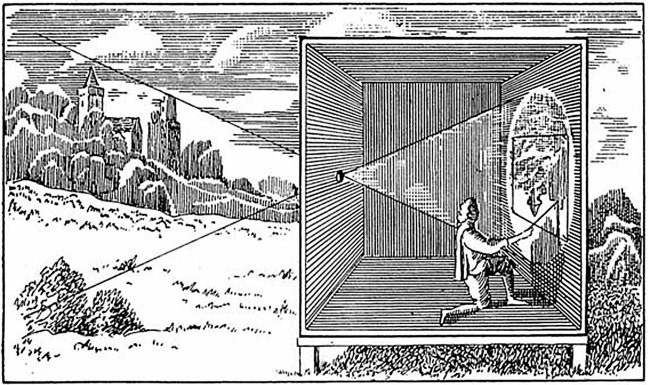
Then, a lot of cameras, which I’m not going to list for the reason that it’ll be so long, have risen in popularity in our societies. Cameras have been examined through scientists’ hands and professionals in order to become more effective and obtain higher performance. Some well-known brands are Nikon and Canon.

Regarding photography as an art, this discipline navigates around genres, artists, themes, works and techniques. Sometimes similar to the art of painting, photography has followed mostly the art movement: avant-garde, propaganda, contemporary art, modernism, pointillism… On one hand, works are really carefully thought through by the artists focusing on lighting, the subject, the background, the meaning. On the other hand, some artist’s photographs are snapshots and have been captured in the right amazing moment.
However, some works are misleading, such as the The Kiss by the Hotel de Ville. Photographed by Robert Doisneau in Paris, this work is one of the most iconic of the 20th century. It reveals the love and romantic aspect that photography may have. Whereas, this photograph was actually all planned, all organized and everything you see was set up, even the extras behind, the cars, and included the blurred background.

Photography also addresses fashion, photojournalism, war, advertising, death, nature, nudes, paparazzi and even more. That’s why I strongly suggest that you buy and read this book: The short story of Photography, which reviews in an enjoyable and pleasant way, the history of photography from the first movement until today.









 Moreover, France is the European crossroad due to its borders with Italy, Spain, Switzerland, Germany, Luxembourg, Belgium…





 ngerous for everybody because it gives us everything we want, letting some people being selfish. But it is also dangerous for our environment. Due to consumerism, the world is going to die slowly. To have beautiful clothes and furniture we kill lots of sheep, elephants, snakes and other animal species extinctions have happened at times. To give us lots of paper, we create deforestation. It is very selfish because we won’t have enough oxygen since trees are lungs of the Earth. Consumerism entrains climate change from the smog of enterprises and powerful countries. Consumerism also creates a big difference between rich and poor people. When someone is poor it is very difficult for him to leave this circle of poverty. Poor countries have lots of difficulties to live next to very rich countries because of this consumerism. It’s almost impossible to become a rich country for a poor country because rich countries try to steal their wealth (petroleum…).




 efsantabarbaranews.com