


By Michela Jotti, Switzerland
Farrokh Bulsara is the real name of Freddie Mercury. Even his official passport read “Frederick Mercury.” He was born on September 5, 1946 on the East African Island of Zanzibar. He spent his childhood in India, where he attended the St. Peter’s boarding school. Then in 1964 his family moved to London where he studied graphic design at the Ealing College of Art and it’s there that he started using the name “Freddie.”
So he spent his childhood in India, where he started piano lessons at the age of seven. Everybody recognized his talent, but nobody could know he would become so important to rock history. During his life he never thought he was a great pianist. In fact, he was always afraid to play “Bohemian Rhapsody” at concerts, so he started playing the piano less and he danced more. While he was studying graphic design he joined a blues band: The Wreckage. In 1970, he joined the rock band: Smile with Brian May and Roger Taylor, but when he joined the band they changed name to “Queen.” The last member who joined the band was John Deacon.
In 1973, their debut album “Queen” was released and it was an evolution of rock music! After that, it was history: “Bohemian  Rhapsody” (1975), “Somebody to Love” (1976), “We Will Rock You”, “We Are the Champions” (1977), “Don’t Stop Me Now” (1978), “Under Pressure” (1982). Mercury revealed that three years after they began, they nearly disbanded. Brian May and Roger Taylor argued about everything and Mercury was the peacemaker. They kept going and they learned from their experiences.
During his concerts and videos he seemed like a crazy man, but in his real life he was shy and he didn’t really talk to people who he didn’t know well. People who had the opportunity to know him said that he was the kindest person they had ever known.
In 1970, he met Mary Austin and they lived together for some years, but in 1976, Mercury told her that he liked men. They always remained friends. He said she was his best friend and he often refered to her as his only true friend. In 1985, he began a long-term relationshi p with Jim Hutton, hairdresser. During his many relationships he did extreme things. For example, once he was on a US tour and he found out that the man he was seeing, Tony Bastin, had been seen out with another man. So he paid for a flight for Bastin saying he wanted to see him. When he arrived, Mercury told him it was over and put him on the next plane back to London. He also kept Bastin’s cat.
Hutton was HIV – positive. In fact, he infected Mercury who found out in 1987. He knew that he was dying and you can feel it in the Queen’s last album, for example, in the song “The Show Must Go On”, which describes Mercury’s effort to continue to perform despite approaching the end of his life. Hutton lived with him for his last six years and he was present at Mercury’s bedside when he died in November 24, 1991.
 Lately, I had the chance to go to lots of places with my family, because they like travelling as much as I do. Last summer we went to Florida for two weeks and we travelled around Florida so that we could see all the different cities. We saw “small” cities, like Fort Myers and Daytona, and also big cities, like Orlando and Miami. I could see the differences between those cities, the small neighborhoods with a lot of lovely houses in Fort Myers and the big ones in Miami with a lot of mansions, the small and empty beaches and the crowded ones.

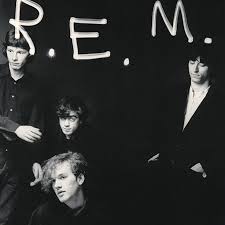
 tive rock started to become very popular. The music industry was enticed by alternative rock’s commercial possibilities. The most popular bands were Nirvana, Jane’s Addiction, Red Hot Chili Peppers, Dinosaur Jr. and Firehose. Nirvana’s second album, Nevermind, became a real commercial success and it marked the start of the grunge music phenomenon.
 em are Coldplay, U2, Green Day and Bastille.



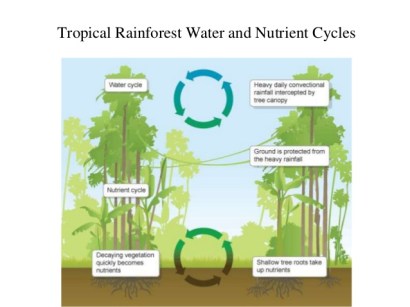
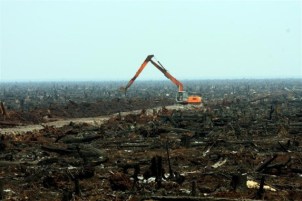
 pical rainforest and their planting area is increasing exponentially . In Malaysia alone 4.917 million hectares are planted and 20,000,000 tons of palm oil get exported every year. Of course all farmers and owners of these plantations want to earn as much money as possible and don’t care about the problems they need to face. The most dangerous thing is the slash-and-burn agriculture. Huge areas are burnt down and very often the fire rages out of control. The social, climatic and environmental impacts are immense; species die out, people have to leave their homes, thousands of orangutans get killed every year and the entire ecosystem is destroyed.
 e can act all together against the destruction of our earth’s forests and wildlife.














 efsantabarbaranews.com